English
Writing at Hounslow Town Primary
At Hounslow Town, we follow the National Curriculum and draw on current research when planning and delivering our writing units. We begin by helping our youngest pupils, as well as those learning English as an Additional Language (EAL) or with Special Educational Needs (SEN), to develop a strong grasp of basic sentence structures. Once this foundation is secure, pupils move on to our ‘Craft for Writing’ units, where they explore purpose, audience, and effective text composition in greater depth. We regularly assess our pupils and offer personalised support, small-group interventions and weekly conferencing sessions to help every learner close any gaps in their knowledge and understanding.
|
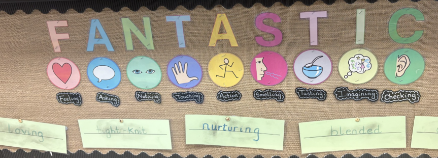
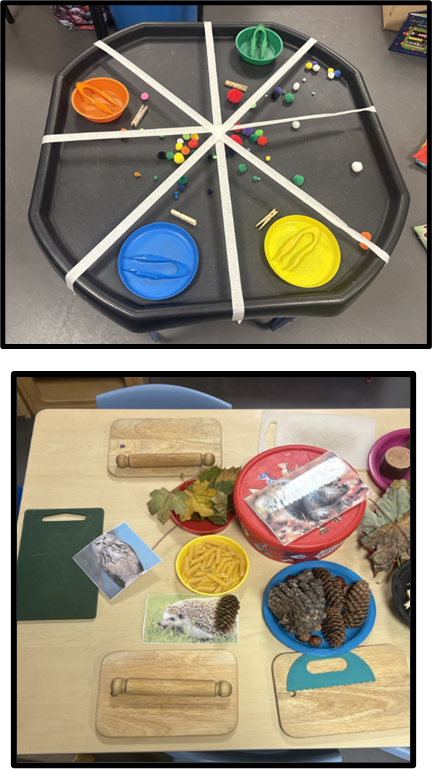
Building the Foundations In EYFS, Year 1 and our Rainbow Centre, children secure their understanding of what makes a complete sentence, how word order affects meaning, and how to use capital letters, full stops and consistent tense. Through the Jane Considine Fantastic Sentences programme, engaging continuous provision activities and stimulating outdoor learning environments, pupils develop early writing confidence, strong communication skills and a genuine love of language. |
Craft for Writing Units
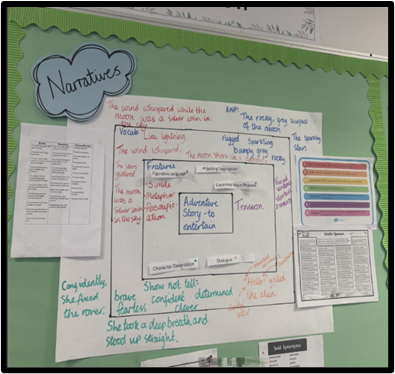
From Year 2 onwards, pupils take part in our Craft for Writing units — our carefully designed writing planning units — each based on a high-quality text. Lessons begin with a creative hook and are followed by an analysis of model texts to explore purpose, audience and structure. Pupils then practise key grammar, punctuation and vocabulary before planning, drafting, editing, redrafting and publishing their own writing. We place a strong emphasis on encouraging pupils to view their writing through the eyes of the reader, reflecting on how their choice of vocabulary, sentence structures and overall text organisation impact the reader’s experience. This structured approach helps them to become confident, reflective and purposeful writers.
Writing for Pleasure
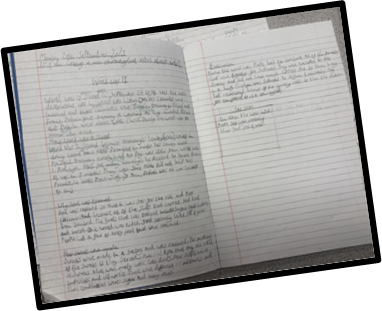
We celebrate writing through timetabled half-termly events such as World Book Day, Black History Month, International Women’s Day and the BBC 500 Words Competition. Our links with local organisations – including the Hounslow Herald and C8 partnership schools – gives pupils real opportunities to share their work. Staff involved in the Get Hounslow Writing programme also bring fresh ideas that inspire creativity across the school.
Handwriting and Spelling
At Hounslow Town, we recognise that strong transcription skills are essential for successful writing. From Nursery onwards, pupils take part in activities that build muscle strength and fine motor control while also being introduced to the correct pencil grip and early letter formation.
From the very start of Reception, pupils take part in daily handwriting sessions. Using the Little Wandle letter cards, children are introduced to the correct letter formation in a way that reduces the load on their working memory. Once confident, they progress to the Nelson handwriting scheme. As a school, we prioritise clear letter formation and print before introducing joined handwriting.
At Hounslow Town, spelling is taught through a clear and structured progression. It begins with a strong foundation in phonics, where pupils take part in daily dictation of words and sentences to reinforce sound–letter correspondence and accurate spelling.
As pupils move through the school, they are encouraged to take increasing ownership of their learning by exploring spelling patterns and rules through the Purple Mash scheme. From Year 2 onwards, the focus broadens to include morphology, helping pupils understand how prefixes and suffixes change a word’s meaning and function.
By Upper Key Stage 2, pupils build on this knowledge through the study of etymology, exploring the origins and histories of words to deepen both their spelling accuracy and vocabulary development.
Reading Café at Hounslow Town Primary School
At Hounslow Town, we have adopted a very bespoke approach to Reading. Reading Café provides the children in Years 2-6 with a range of key skills that support them when reading all text types.
Fluency and Retrieval
 In the Autumn term, we explore fluency and retrieval in depth to ensure that children have the skills to understand the wide range of texts they are exposed to. We initially focus on ensuring that the children can identify different text types by exploring the key features of each text. Children also have deep discussions about their mental picture, and this helps them to visualise key parts of the text. In addition, we develop the children’s ability to understand challenging vocabulary through the main skills:
- Swapping out
- Read around the word
- Consider whether the word is a positive or negative word
- Think about where we have heard this word before
- Explore how the prefixes and suffixes support our understanding of the word
- Discuss what the root word is

 Summary, Prediction and Inference
As we move through the Spring term, children develop their ability to summarise, predict and infer key details. We feel that this is an appropriate time to approach these more complex skills as children have become increasingly confident with their fluency and retrieval by this time. Although we continue to encourage the children to use their vocabulary skills and discuss their mental picture, we look to deepening their understanding of how to skim a text to get a general idea of what is happening and apply their clue hunting skills to predict and infer key details.
 Comparing texts and combining all the skills
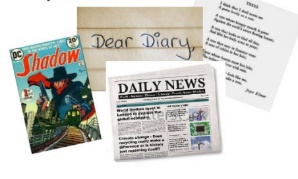
Now that the children have enhanced their understanding of the key Reading Café skills and applied these to various areas of reading, we support children to use their skills to compare texts, thinking about the text type, tone, main message and genres.
Book Gossip
The children have weekly Book Gossips sessions which focus on developing a love of reading and enhancing their understanding of various text types. These sessions will consist of projects including making a ‘genre in a box’, creating a collage of their favourite genres or even presenting their understanding of various poems through drama and role play!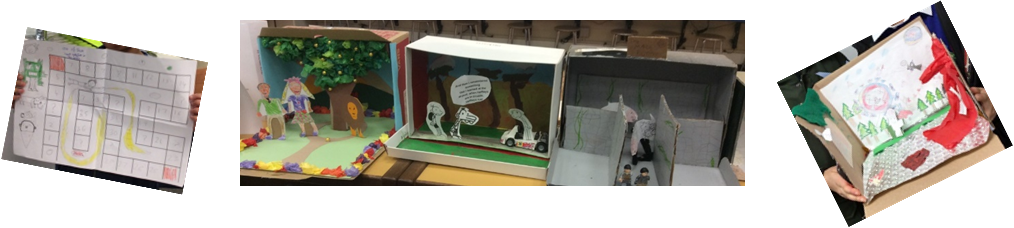
Guided Reading and 1:1 Reading
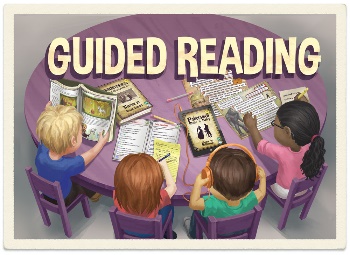 Guided Reading supports children’s ability to read and understand texts in small focus groups. Children are given the opportunity to read a banded book with an adult. This book is appropriate for where they currently are in their reading journey. Through discussions and questioning, children deepen their fluency and understanding of key texts. Children are also able to develop their reading skills through 1:1 reading.