Early Years Curriculum and Year 1
At Hounslow Town Primary School, Nursery and Reception are known as the Early Years Foundation Stage (EYFS) and are the first steps in a child’s school education from 3-5 years of age. Our aim is to create a safe, stimulating learning environment and provision, where all children are celebrated and can develop as resilient, independent, confident and happy learners. Giving each child an equal opportunity for success.
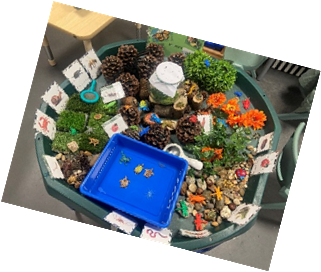
We follow the Government’s ‘Statutory Guidance’ for the EYFS, alongside the non-statutory ‘Development Matters’ framework. From Nursery through to Reception we focus on how children learn, looking at each child’s ‘Characteristics of Effective Learning’ and how best to meet their individual needs when planning a rich and diverse curriculum. All children are given the opportunity to learn through a range of hands-on practical experiences that are both adult initiated and child centred. We encourage children to explore and play with a variety of age-appropriate resources that allow children to foster and develop their curiosity and a love of learning. Quick identification of children with SEND is key to supporting children and families to receive the support needed for individual children.
Parental Partnerships
A positive partnership between parents/carers and school are key to the success of children’s learning in the EYFS. It is important to us, to be able to work together with families to build a strong partnership, where we can learn from parents/carers how their child learns and celebrate and build upon children’s success both in and outside of the learning environment. We begin this partnership before children begin at Hounslow Town, offering welcome meetings and important stay and play sessions, extending to home visits at the start of Autumn term
Our Curriculum
The Early Years Curriculum is split into 7 main areas of learning each with its own Educational Programme. These 7 areas are:
Prime Areas: Specific Areas:
- Personal Social and Emotional Development - Literacy
- Physical Development - Mathematics
- Communication and Language - Understanding the World
- Expressive Arts and Design
|
Nursery In Nursery we focus on the ‘Prime areas’ of learning, which lay the foundations for children’s learning, equipping them with vital tools needed in later life. We have a strong focus on helping children to build relationships and understand and regulate their emotions to become confident learners. We also develop fine and gross motor skills which are needed across many areas of learning. |

Communication and Language
Developing children’s communication skills is key across Nursery and Reception. We embed new language into our themes and topics to ensure that we are providing children with the skills to become confident communicators with a rich vocabulary bank. As a team we know that children who struggle to communicate will struggle with many aspects of learning which is why it is important for us to get this right from the start.
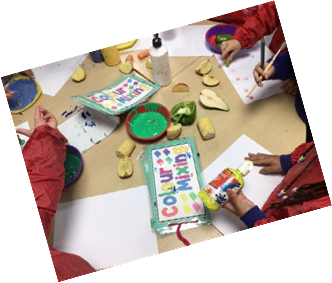
Reception
At the end of the Reception year, children are assessed against the ‘Early Learning Goals’, which complete the Foundation Stage Profile. Children will be assessed as ‘embedded’, having met the expected level of attainment, or ‘emerging’ not having met the expected level of attainment. We work closely with the Year one team to ensure all information about your child’s ‘Characteristics of Effective Learning’ as well as their attainment is passed on, to ensure a smooth transition into Key Stage 1.
Phonics and Handwriting
In Nursery and Reception, we follow the Phonics Scheme ‘Little Wandle Letters and Sounds Revised.’ The scheme enables the children to learn and embed their knowledge of rhymes and sounds in the Nursery, extending to blending and segmenting to become confident readers in Reception. Through Assessment for Learning in Reception, we quickly identify where children are finding phonics tricky and use the scheme’s ‘Keep Up’ sessions to support children to make progress. The scheme has a strong focus on handwriting and through additional daily practice, we work with all children across the EYFS to ensure there are continual opportunities for mark making as well as developing correct pencil grip and forming letters in the correct way.
|
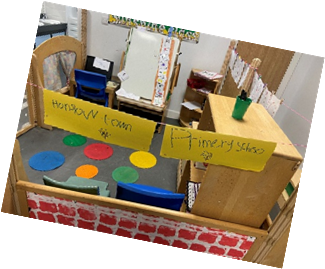
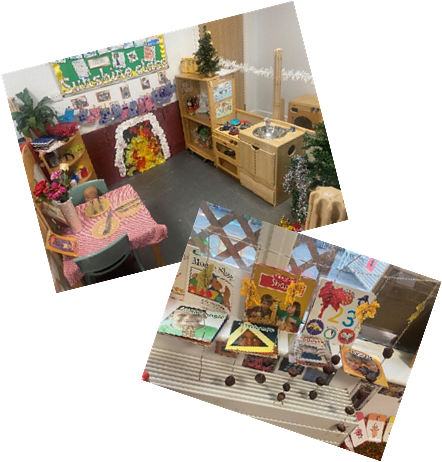
Learning Environment Our Early Years classrooms are bright, engaging and welcoming learning environments. Both the Nursery and Reception have their own outside learning areas as learning outside of the classroom is a key part of our curriculum, embracing the outdoors in all weathers, throughout the year.
Phonics and Handwriting In Nursery and Reception, we follow the Phonics Scheme ‘Little Wandle Letters and Sounds Revised.’ The scheme enables the children to learn and embed their knowledge of rhymes and sounds in the Nursery, extending to blending and segmenting to become confident readers in Reception. Through Assessment for Learning in Reception, we quickly identify where children are finding phonics tricky and use the scheme’s ‘Keep Up’ sessions to support children to make progress. The scheme has a strong focus on handwriting and through additional daily practice, we work with all children across the EYFS to ensure there are continual opportunities for mark making as well as developing correct pencil grip and forming letters in the correct way.
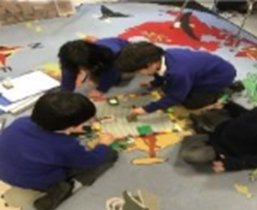
Year 1 Busy Learning Area (BLA) At Hounslow Town, we are proud to offer a dedicated ‘Busy Learning Area’ (BLA)—a large, vibrant space that serves as an extension of the Year 1 classrooms. Children access the BLA throughout the week, engaging in rich, multi-sensory, first-hand learning experiences that make the curriculum more practical, creative, meaningful and fun. The BLA plays a crucial role in supporting and extending children's learning. It is particularly beneficial for easing the transition from Reception to Year 1 as well as serving as an invaluable resource for pupils with SEND, those with limited or no English, and the growing number of new arrivals with little or no prior Early Years education.
Learning in the BLA offers opportunities for exploration through structured play. These experiences help develop a broad range of skills, including:
Throughout the school day, groups of up to twenty-five children; five from each Year 1 class, access this area. Mixing children from different classes allows greater social interactions fostering not only language development but the opportunity to collaborate with peers from across the year group. The Busy Learning Area is a dynamic and inclusive space that brings learning to life, ensuring all children have the opportunity to thrive, regardless of their starting point. Year 1 Busy Learning Area (BLA) At Hounslow Town, we are proud to offer a dedicated ‘Busy Learning Area’ (BLA)—a large, vibrant space that serves as an extension of the Year 1 classrooms. Children access the BLA throughout the week, engaging in rich, multi-sensory, first-hand learning experiences that make the curriculum more practical, creative, meaningful and fun. The BLA plays a crucial role in supporting and extending children's learning. It is particularly beneficial for easing the transition from Reception to Year 1 as well as serving as an invaluable resource for pupils with SEND, those with limited or no English, and the growing number of new arrivals with little or no prior Early Years education.
Learning in the BLA offers opportunities for exploration through structured play. These experiences help develop a broad range of skills, including:
Cooperation and social interaction Fine motor skills Creativity The space is thoughtfully set out to cater to a diverse level of need. Children benefit from accessible, practical activities; allowing them to consolidate knowledge and build confidence. Challenge is offered through problem-solving tasks and targeted questioning. Underpinning all activities is a strong emphasis on language acquisition. Throughout the school day, groups of up to twenty-five children; five from each Year 1 class, access this area. Mixing children from different classes allows greater social interactions fostering not only language development but the opportunity to collaborate with peers from across the year group. The Busy Learning Area is a dynamic and inclusive space that brings learning to life, ensuring all children have the opportunity to thrive, regardless of their starting point.
Year 1 Outdoor Learning
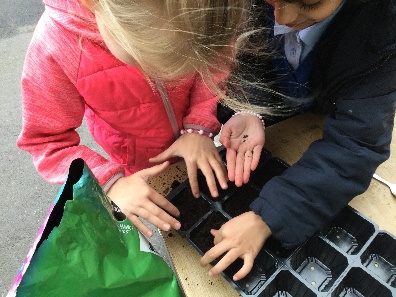
Given that Hounslow is a growing urban area, with many families living in flats without access to gardens, this outdoor provision is especially valuable. It offers children access to a natural environment they may not otherwise experience.
|
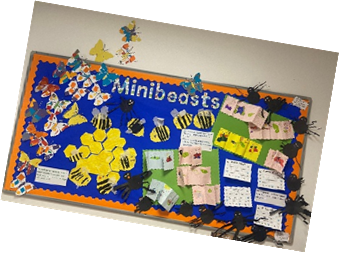
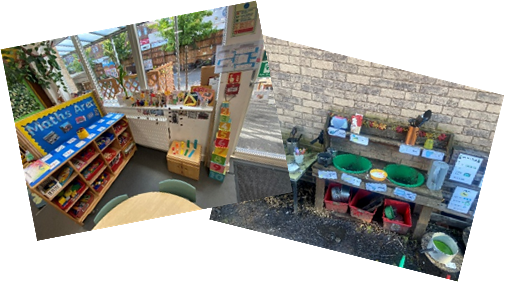
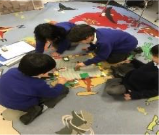 Each week, children take part in a wide range of carefully planned, open-ended activities linked directly to the classroom learning. This strong connection reinforces key concepts and enables children to explore, consolidate, and deepen their understanding in an engaging, hands-on environment.
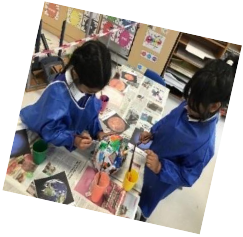 The space is thoughtfully set out to cater to a diverse level of need. Children benefit from accessible, practical activities; allowing them to consolidate knowledge and build confidence. Challenge is offered through problem-solving tasks and targeted questioning. Underpinning all activities is a strong emphasis on language acquisition.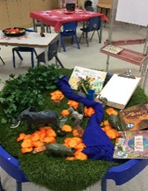
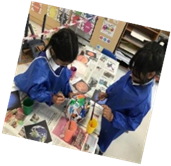
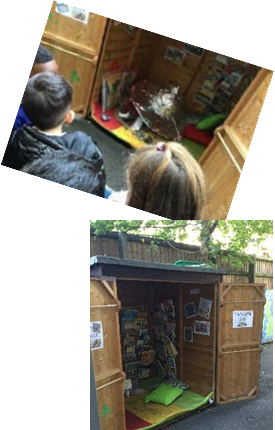
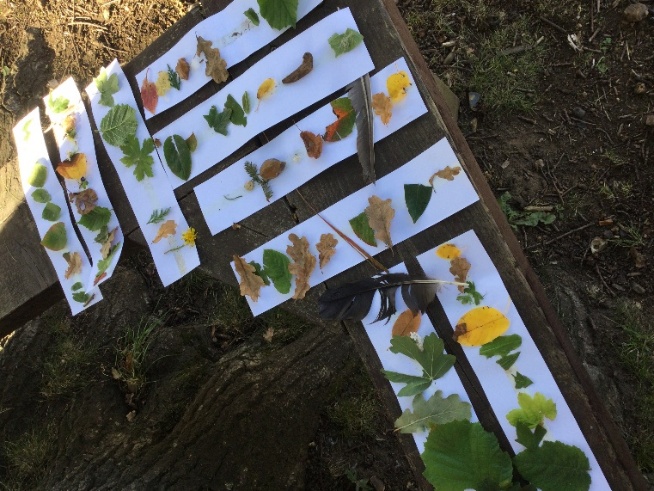 At Hounslow Town, we recognise that children thrive in different environments and learn in a variety of ways. In Year 1, we are fortunate to have a dedicated outdoor learning space that enhances and reflects the learning taking place inside the classroom.
 This carefully planned provision offers children the chance to develop essential skills through exploration, movement, and hands-on experiences. Outdoor learning allows for greater freedom, our children can be louder and more physically active, which often leads to increased confidence and improved attitudes toward learning. Many children who find it challenging to concentrate indoors often blossom when given the opportunity to learn outside.
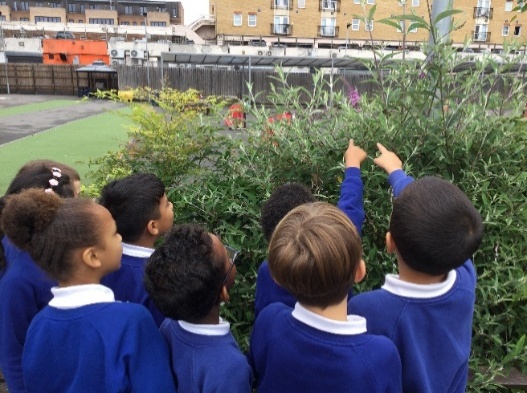 Our outdoor space supports the development of a wide range of skills that may not be fully nurtured inside the classroom setting. It promotes physical health, encourages curiosity, and fosters a love of nature. The activities are open-ended and inclusive, providing meaningful experiences for all children, regardless of their background or previous life experiences.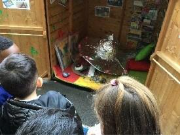
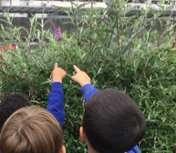 We believe our outdoor learning environment develops the children’s curiosity, resilience, and a sense of adventure. It encourages them to explore, ask questions, and engage with the world around them in a hands-on way that supports deeper learning and personal growth.